
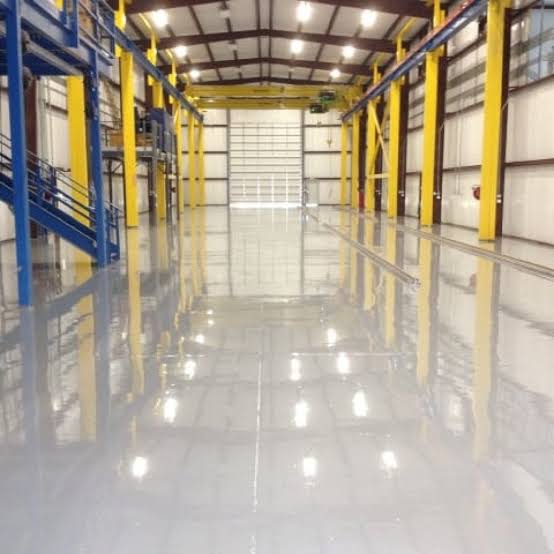
Growth is exciting until you realize how much of your existing building wasn’t really built for it. More orders mean more forklift trips, more pallet movement, and a lot more wear happening on a floor that was probably fine for the volume you had five years ago. It’s one of those problems that sneaks up quietly – everything seems okay until the concrete starts showing cracks right around the same time you’re trying to ramp up output. That’s usually the point where epoxy flooring for warehousing goes from a nice-to-have to something worth taking seriously, and honestly, the earlier it happens, the less disruptive it is.
Why Warehouse Epoxy Flooring Matters More as Operations Scale Up
A floor that handled light, occasional traffic just fine can fall apart fast once you’re running double or triple shifts with equipment moving nonstop. Concrete that wasn’t sealed properly starts absorbing oil, grease, and moisture at a much faster rate once traffic picks up, and what used to be a minor cosmetic issue turns into cracking, pitting, and dust that gets into everything. Growth exposes weaknesses that were always there, just never tested hard enough to show up.
A properly installed coating gives you a surface that scales with the operation instead of working against it. It handles the added traffic, resists the chemical exposure that comes with more equipment and inventory moving through, and keeps performing without needing constant patchwork every time volume increases again.
Planning Flooring Alongside Layout and Equipment Upgrades
A lot of facilities upgrade racking, add new equipment, or redesign traffic flow without giving much thought to the floor underneath all of it. That’s a missed opportunity, since flooring work is far easier to plan around a broader renovation than to squeeze in later once everything else is already in place. Facilities that fold epoxy flooring for warehousing into a larger renovation plan usually see less overall downtime and a more cohesive result once everything’s finished.
Getting Ready for Automation and Higher-Density Operations
More warehouses are bringing in automated guided vehicles, conveyor systems, and robotics to keep up with demand, and none of that equipment performs well on an uneven or deteriorating surface. Automated systems in particular rely on flat, consistent flooring to navigate accurately and avoid mechanical strain that shortens their lifespan. A subpar floor doesn’t just look bad next to new equipment; it can actually limit how well that equipment functions.
Higher storage density adds pressure too, since taller racking systems concentrate more weight onto smaller footprints. A coating designed for heavy industrial loads holds up under that kind of pressure far better than standard sealed concrete, which matters a lot once you’re maximizing every square foot of available space.
How Warehouse Epoxy Flooring Supports Automation and Robotics Readiness
Facilities preparing for automation often find that flooring is one of the first things that needs addressing, well before any new equipment shows up. Warehouse epoxy flooring creates the kind of flat, seamless surface that automated systems depend on for accurate navigation and consistent performance, which makes it less of an afterthought and more of a genuine prerequisite for a smooth rollout.
Planning the Right Timeline With Your Contractor
Timing matters just as much as the product itself when growth is already underway. Rushing an installation to squeeze it in before a busy season can lead to shortcuts in prep work, and that almost always shows up later as premature wear or peeling.
One thing worth confirming early in the process:
- Ask your contractor directly whether the project can be phased around your operational calendar, so certain zones stay usable while others are being worked on.
Getting that answered clearly upfront tends to prevent a lot of scheduling headaches once the project actually starts. It’s also worth discussing your growth plans directly with whoever you’re hiring, since a good epoxy flooring for warehousing provider will factor future traffic increases into their recommendation instead of just solving for what the facility looks like today.
Conclusion
Scaling a warehouse successfully depends on more than new equipment and bigger orders – it depends on infrastructure that can actually keep up with the pace you’re setting. A properly installed coating gives growing facilities a floor that supports higher traffic, heavier loads, and increasingly automated operations without becoming the weak link in the whole system. When you’re planning that next stage of growth, High Performance Systems brings the kind of practical, industrial-focused experience that helps this upgrade happen smoothly instead of becoming another bottleneck. Getting the floor right early means one less thing standing between your facility and where it’s headed next.
Frequently Asked Questions
- Should flooring be upgraded before or after adding new equipment?
Generally, before, since a stable, level surface makes equipment installation smoother and helps avoid unnecessary strain on new machinery.
- Does this type of flooring support automated systems and robotics?
Yes, the flat, seamless surface is well suited to automated guided vehicles and similar equipment that depend on consistent navigation conditions.
- Can installation be phased to avoid shutting down the whole facility?
Often, yes. Many contractors can work section by section, keeping parts of the warehouse operational while other zones are being completed.
- How does higher storage density affect flooring needs?
Taller racking concentrates more weight onto smaller areas, so a coating designed for heavy industrial loads becomes increasingly important.
- Is it worth upgrading flooring before growthactually happens, or after?
Planning is usually better, since addressing it proactively avoids emergency repairs and disruption once traffic has already increased.